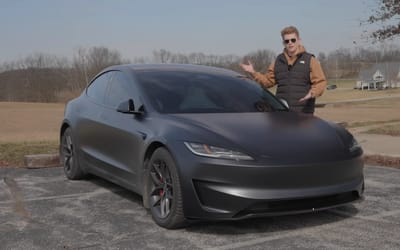
Man does highway speed test at 50mph, 60mph and 70mph with his Tesla Model Y to find out what the sweet spot is for EV range
Published on Mar 05, 2026 at 3:55 PM (UTC+4)
by Callum Tokody
Last updated on Mar 05, 2026 at 3:55 PM (UTC+4)
Edited by
Amelia Jean Hershman-Jones

Testing a Tesla Model Y has revealed exactly how a specific highway speed directly impacts the total EV range during a real-world efficiency test.
Most drivers suspect that driving faster drains the battery, but the actual data shows a much steeper penalty than many expect.
This specific evaluation utilized a 2026 rear-wheel drive model to establish clear benchmarks across various cruising speeds on a controlled loop.
The results identify a specific point where the time saved on the road is completely negated by the energy cost of the journey.
The Tesla Model Y sweet spot
The initial run at 50mph served as a baseline to determine the maximum efficiency of the Tesla Model Y.
At this steady speed, the car recorded a consumption rate of 222.87Wh per mile.
While this pace yields the highest possible EV range, it results in a four-hour travel time for a 200-mile journey.
For most drivers, this velocity is likely too slow for practical highway use, despite the high efficiency.
Increasing the speed to 60mph shifted the efficiency test results immediately.
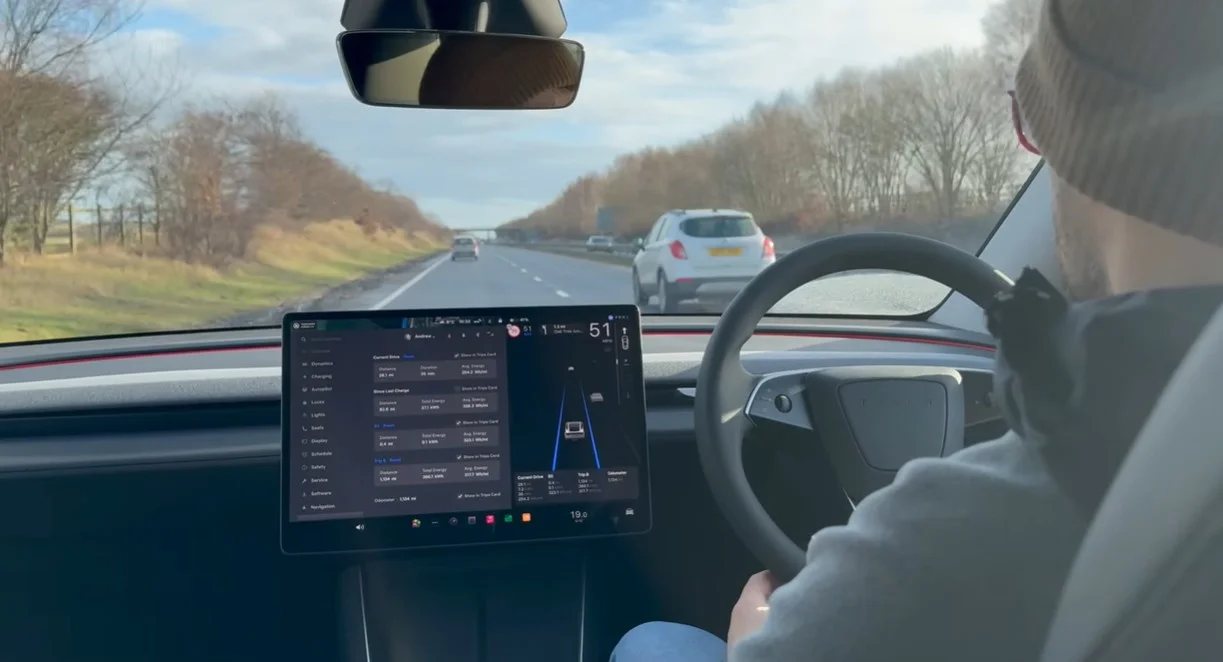
Energy consumption rose to 249.9Wh per mile, an 11.2 percent increase over the 50mph baseline.
This change reduces the travel time for a 200-mile trip by 40 minutes.
At this speed, the Tesla Model Y maintains a functional balance between a reasonable arrival time and conservative battery usage.
Cruising at 70mph caused energy requirements to climb to 302.2Wh per mile.
This represents a 34.5 percent increase in energy consumption compared to the baseline.
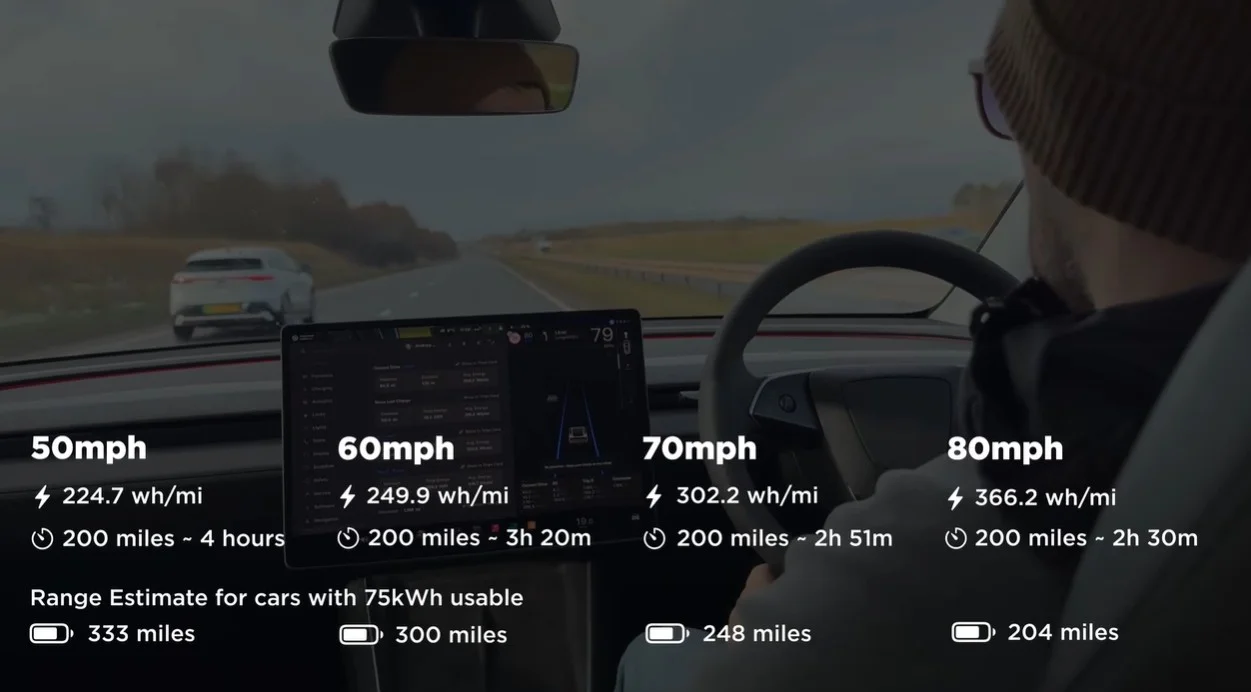
While the 200-mile trip time drops to two hours and 51 minutes, the energy penalty becomes more pronounced.
Drivers must decide if saving an additional 29 minutes is worth the substantial reduction in EV range.
The final segment of the efficiency test involved a run at 80mph, where consumption reached 366.2Wh per mile.
This is a 63 percent increase in energy usage over the 50mph run.
Although the travel time for 200 miles theoretically drops to two hours and 30 minutes, the energy drain is severe.
In practice, the time saved on the road is often lost to the longer charging sessions required to replenish the battery.
Where range goes to die
External factors like temperature and trip duration are primary influences on the EV range of the Tesla Model Y.
Short journeys in cold conditions are notably inefficient because the vehicle uses considerable energy to heat the cabin and battery.
Data shows that brief 15-minute trips in winter can increase consumption by up to 40 percent compared to long-distance cruising.
Utilizing a home charger to precondition the car before departure helps reduce these initial losses.
Manufacturers continue to refine thermal management hardware to improve the results of every efficiency test.
The latest heat pump systems in the Tesla Model Y are designed to manage temperatures more effectively in near-freezing weather.
These technical adjustments help stabilize energy usage, though they cannot overcome the physical reality of wind resistance.
Aerodynamic drag remains the most consistent factor in high-speed battery drain.
The most effective highway strategy involves maintaining a steady speed between 60 and 65mph.
This approach preserves the EV range while keeping travel times competitive with traditional vehicles.
While the expansion of charging networks makes range anxiety less common, the physics of energy consumption remain constant.
Future developments in battery technology will likely prioritize maintaining these efficiency levels as cruising speeds increase.
DISCOVER SBX CARS: The global premium car auction platform powered by Supercar Blondie