Photo goes viral after people questioned why engineers built a winding road instead of a straight route but this is why
Published on Mar 05, 2026 at 12:09 AM (UTC+4)
by Molly Davidson
Last updated on Mar 20, 2026 at 4:14 PM (UTC+4)
Edited by
Amelia Jean Hershman-Jones
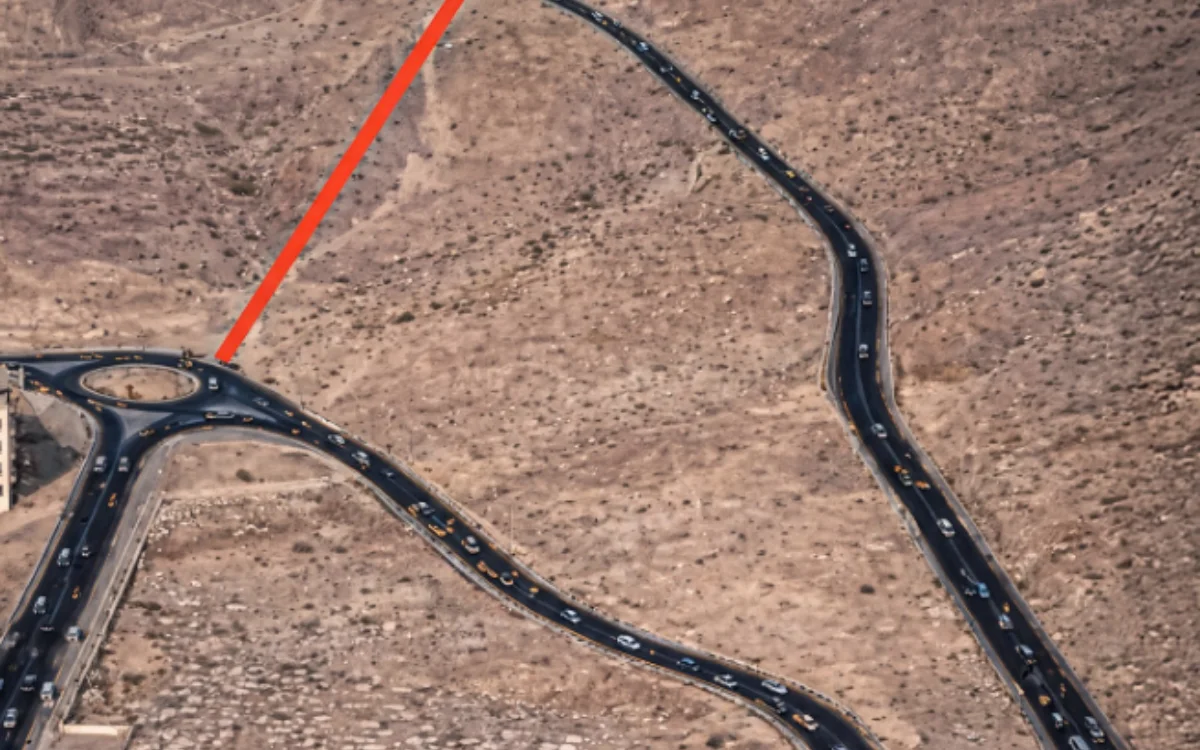

A photo of a winding road in the mountains recently went viral after people online started asking the same question.
Why didn’t engineers build a straight road up the hill instead?
At first glance, the zig-zagging route looks inefficient, like someone simply drew a squiggly line across the mountain.
But the real reason comes down to physics, safety, and a bit of common sense from the people who design roads.
DISCOVER SBX CARS – The global premium auction platform powered by Supercar Blondie
Here’s why mountain roads are built with curves
We’ve all seen them, roads that go on for miles, snaking up the mountainside, curling around themselves, and looking like something straight out of GT7.
And while they do look amazing, there’s a more practical reason these mountain roads are curvy, and it’s surprisingly straightforward.
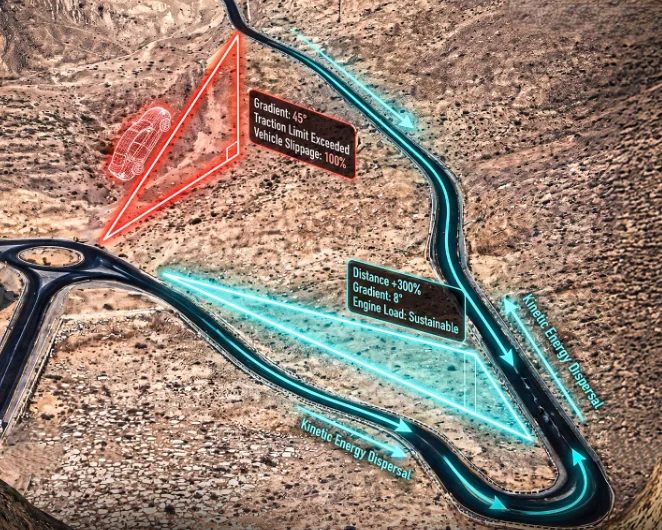
If engineers built a straight road up a steep mountain, the slope would quickly become too sharp for most vehicles to handle safely.
Cars would struggle to climb it, and descending the hill would be an actual nightmare.
Road designers, therefore, stretch the route out with bends and switchbacks, which look amazing, as well as making the climb that much easier on your vehicle. And vertigo.
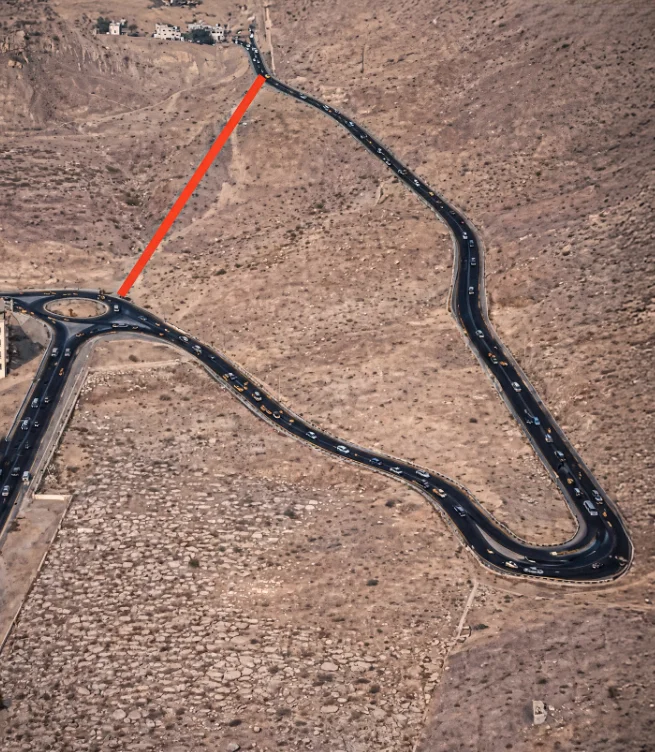
And that works because, by increasing the distance the road travels, they reduce the gradient – essentially spreading the height change across a longer distance.
That makes the climb manageable for engines and transmissions, while also giving drivers more control when heading downhill.
Without those curves, heavy vehicles like trucks and buses would be particularly at risk, since steep descents can overwhelm braking systems and lead to loss of control.
The longer, winding route solves that problem.
Vehicles can maintain steadier speeds, braking loads stay lower, and the overall drive becomes far safer.
Click the star icon next to supercarblondie.com in Google Search to stay ahead of the curve on the latest and greatest supercars, hypercars, and ground-breaking technology
A winding road isn’t just safer, it also has other benefits
Safety isn’t the only reason these roads twist and turn, though. There’s also a more basic explanation.
Mountain landscapes are notoriously difficult to build on and through. Which means that carving a straight line into the hillside often requires a huge amount of excavation work.
That means blasting rock, stabilizing cliffs, and installing large structural supports to prevent collapse.
But, by following the natural contours of the mountain, those incredible winding roads reduce how much earth has to be moved in the first place.
It also has the added benefit of lowering the risk of landslides, as straight cuts into steep slopes can destabilize the surrounding terrain, whereas curved roads tend to hug the existing landscape more naturally.
And then there’s the cost factor.
Less excavation and fewer large structures mean the road is cheaper to build and easier to maintain long term.
So the next time you see a road zig-zagging around the mountains, it isn’t poor planning or wasted effort.
It’s actually careful engineering doing exactly what it’s meant to do – making a dangerous climb safe enough for everyone to drive.
DISCOVER SBX CARS: The global premium car auction platform powered by Supercar Blondie
With roles at TEXT Journal, Bowen Street Press, Onya Magazine, and Swine Magazine on her CV, Molly joined Supercar Blondie in June 2025 as a Junior Content Writer. Having experience across copyediting, proofreading, reference checking, and production, she brings accuracy, clarity, and audience focus to her stories spanning automotive, tech, and lifestyle news.