We asked Google Gemini to create a Ferrari in 2050 and this is what it came up with
Published on Sep 24, 2026 at 10:00 PM (UTC-4)
by Ben Thompson
Last updated on Sep 24, 2026 at 10:00 PM (UTC-4)
Edited by
Mason Jones
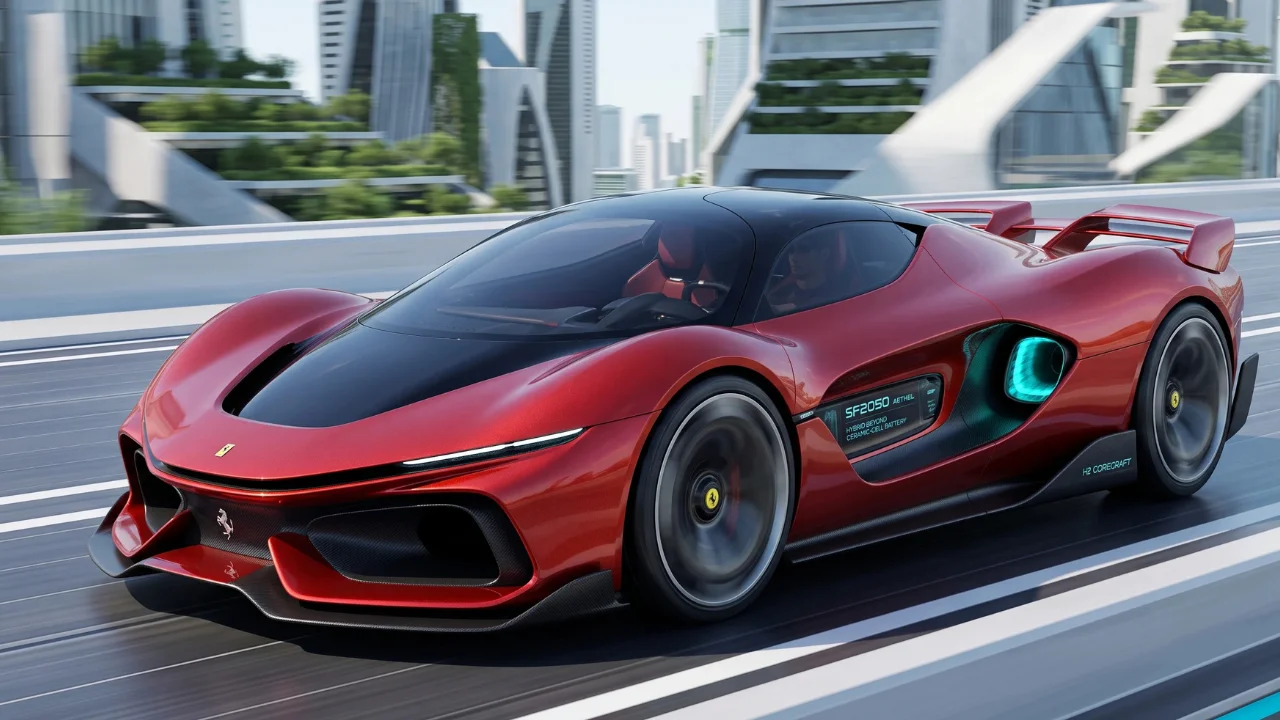

When we asked Google Gemini to create an image of what a Ferrari in 2050 might look like, we were blown away with what came back to us.
Ferrari is a brand synonymous with automotive greatness and Italian flair.
It’s been around for a long while now, so you can’t help wondering what it’ll look like a few decades from now.
Thanks to the power of generative AI images, we now have an idea of what might be coming down further down the line.
What’s next for the brand?
One need only look at a Ferrari to understand why the car brand has become a symbol of national pride for the Italians.
These cars are synonymous with luxury, car, and power, all wrapped up in a gleaming red package.
From the sunny shores of Monaco to the English countryside, these cars stand out wherever they are.
But when a car brand has been around for so long, you can’t help but wonder what lies in store for it going forward.
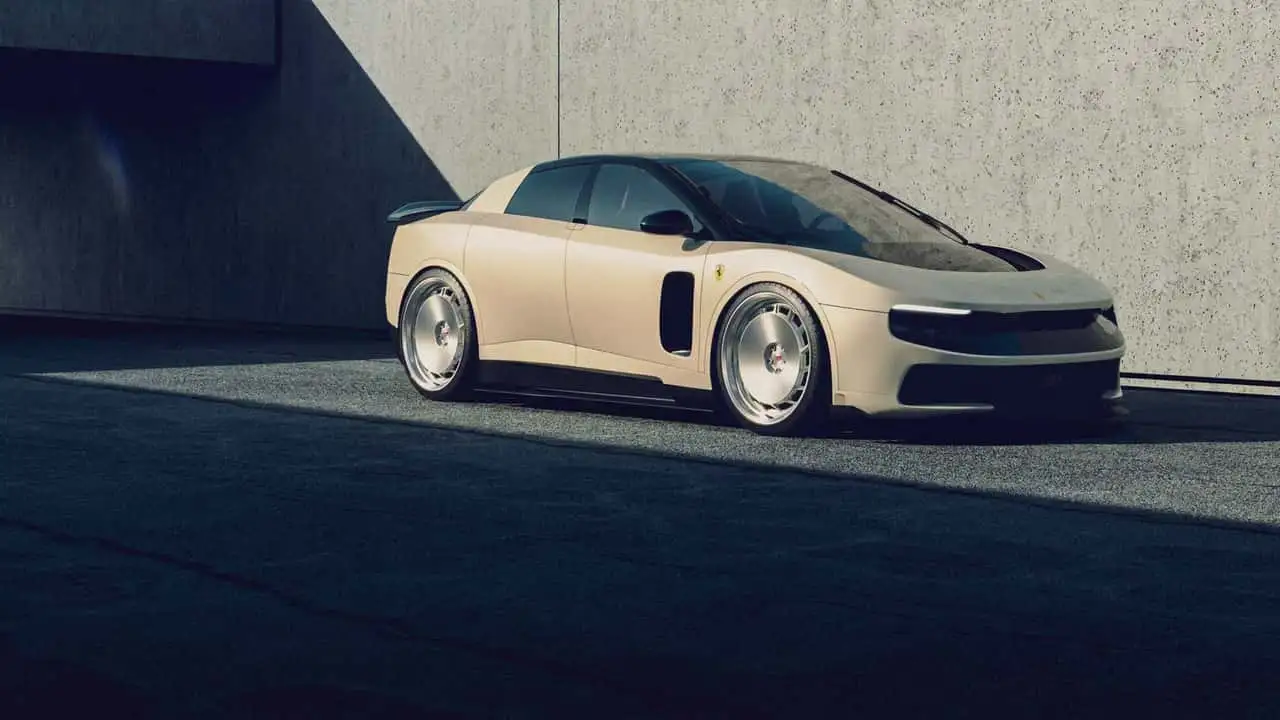
We’ve already seen signs of what we might expect – the Ferrari Luce proves that electrification is not off the table.
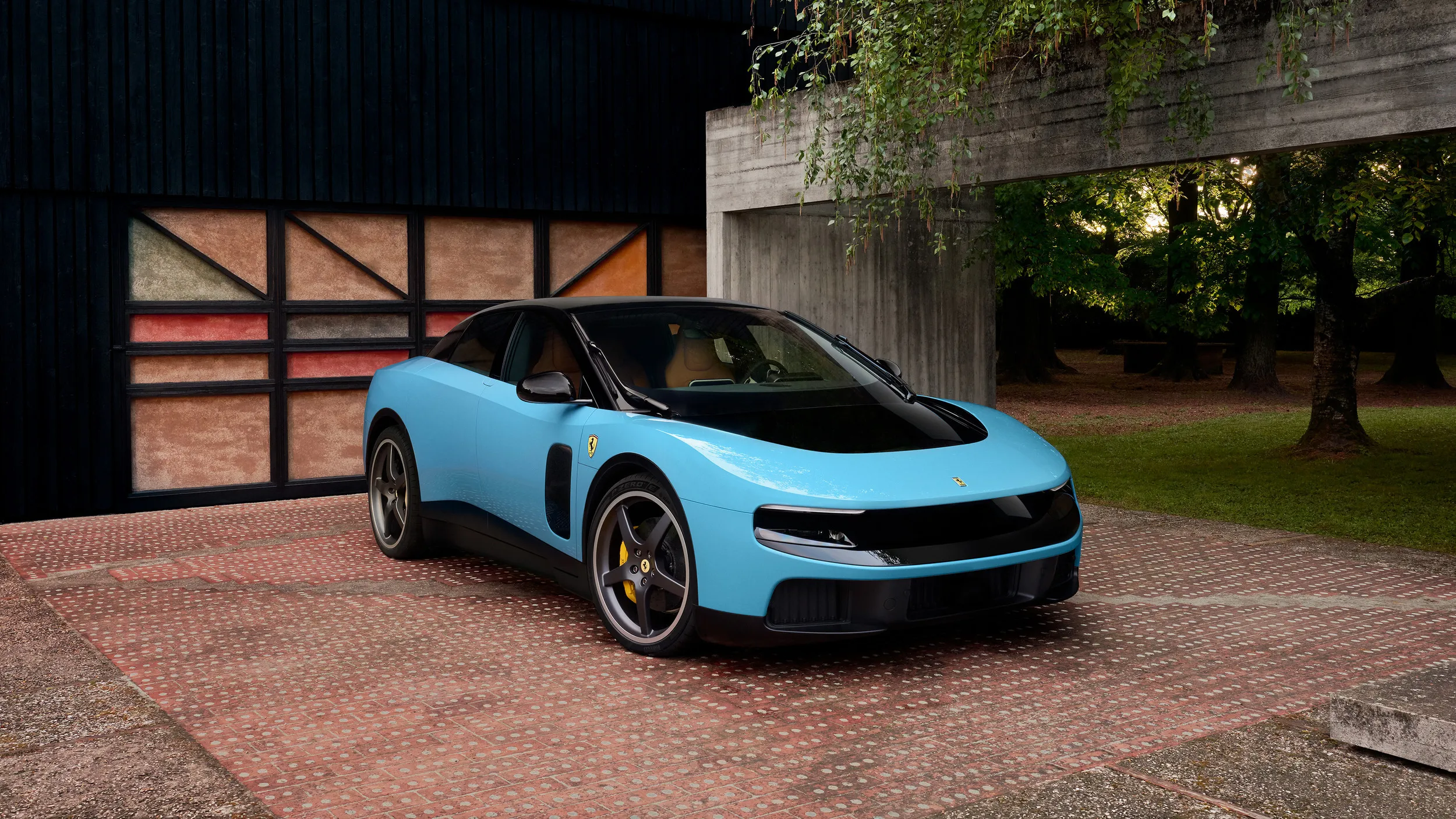
But what might a standard Ferrari in 2050 look like?
Unfortunately, we don’t have a crystal ball or a DeLorean to have a definitive answer.
But we do have Google Gemini, and we’ve asked it come up with an image of what we might expect based on current trends.
It came back to us with something truly fascinating.
What could a Ferrari in 2050 look like?
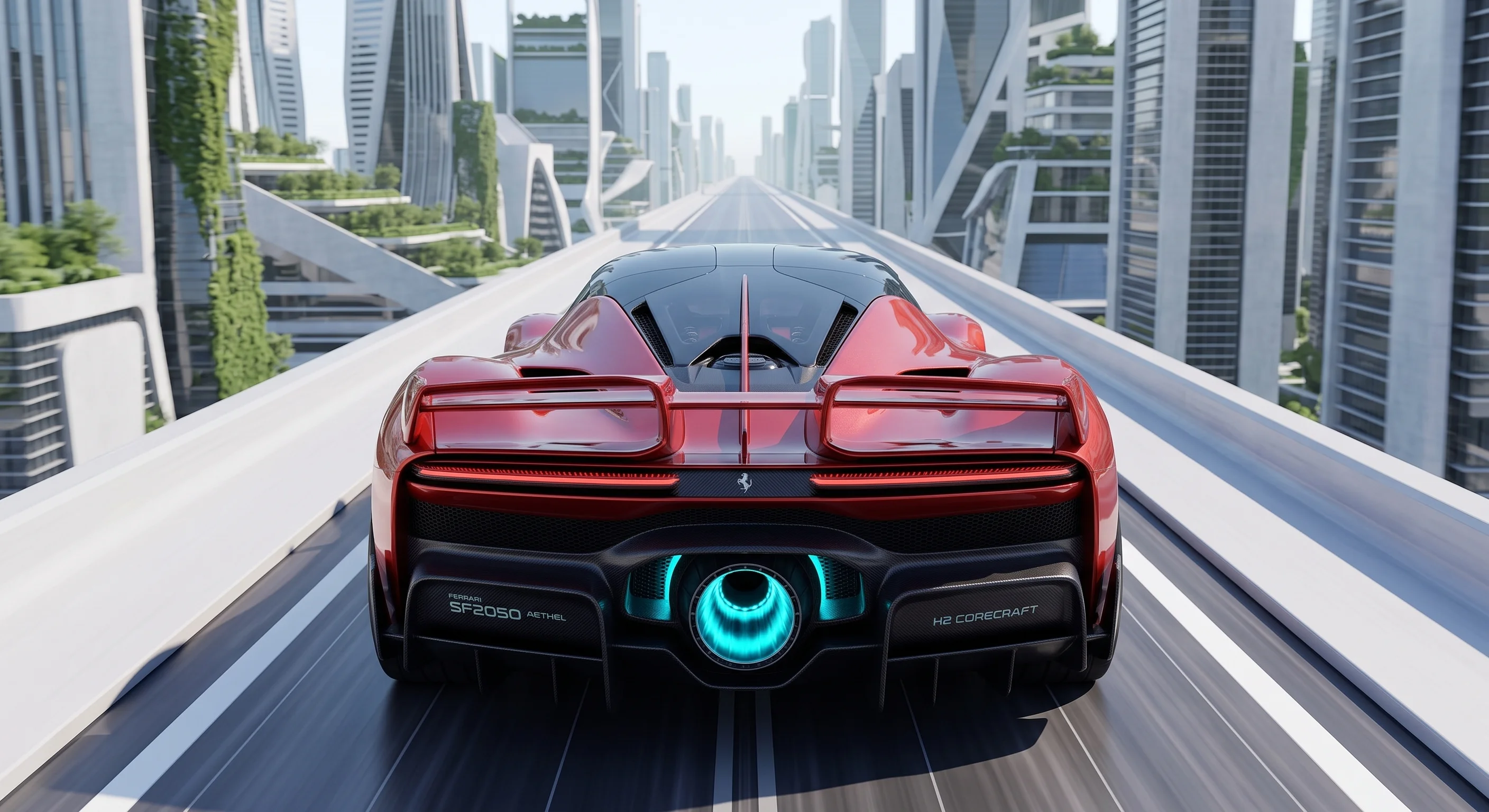
There are still recognizable trademarks of Ferrari on this design – the red exterior and the stallion logo being the two most notable.
But in many other regards, this car is a totally different beast from what we see today.
“This concept for a Ferrari in 2050 was created by synthesizing current aerodynamic research, materials science, and clean-energy trends with Ferrari’s core design language,” Gemini said.
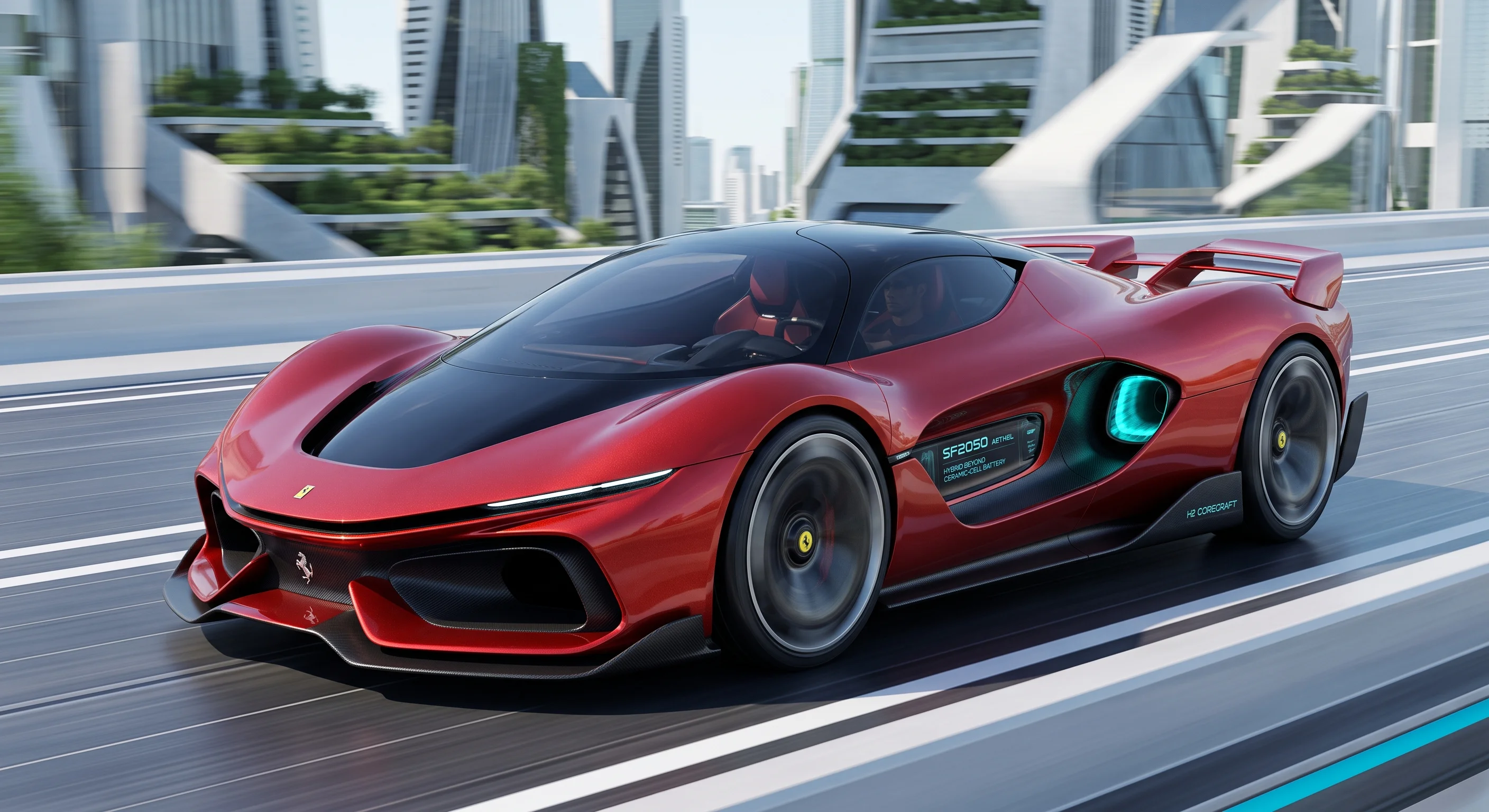
“The design focuses on merging extreme function (aerodynamics and powertrain cooling) with the elegant, aggressive form expected from the brand.”
Noting that modern hypercars are shaped by airflow, Gemini noted that it anticipated ‘active flow control’ by 2050, meaning surfaces won’t be static.
“The entire front fascia was designed as an air inlet, directing flow through the body rather than just over it,” it said.
Gemini anticipated that this Ferrari of the future would be either electric or a zero-emission hybrid.
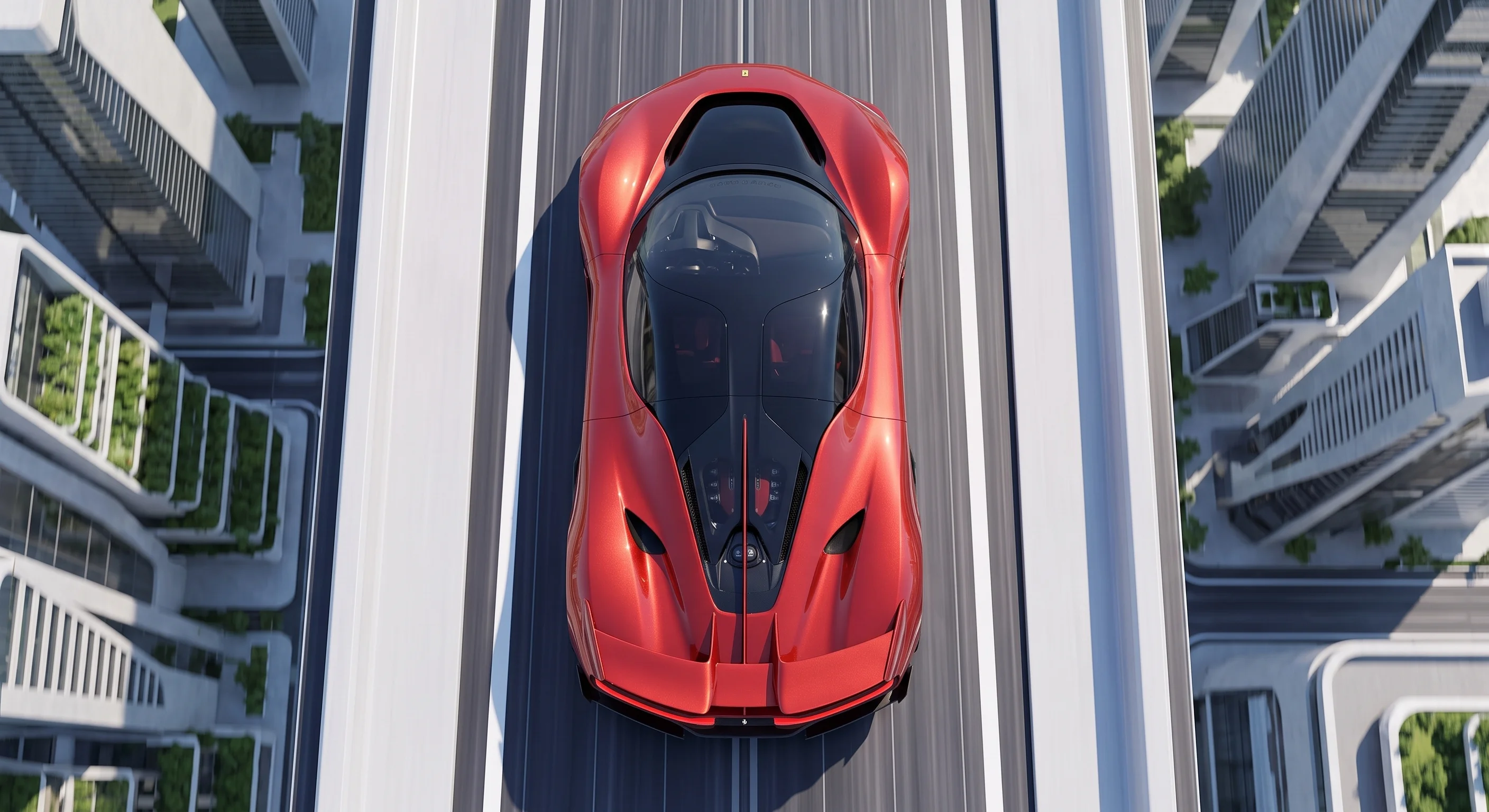
“[As a result] we prioritized high-capacity cooling,” the AI explained.
“This led to the creation of the massive side ventricles, which are designed to capture and vent air from critical components like batteries and motors.”
What did Google Gemini think things would look like on the inside?
If you didn’t know that this was meant to be a Ferrari’s interior, you might have thought you’d found a screengrab from a new Tron movie.
Blue ambient lighting runs up the center console and into the dashboard.
This serves as a communication tool.
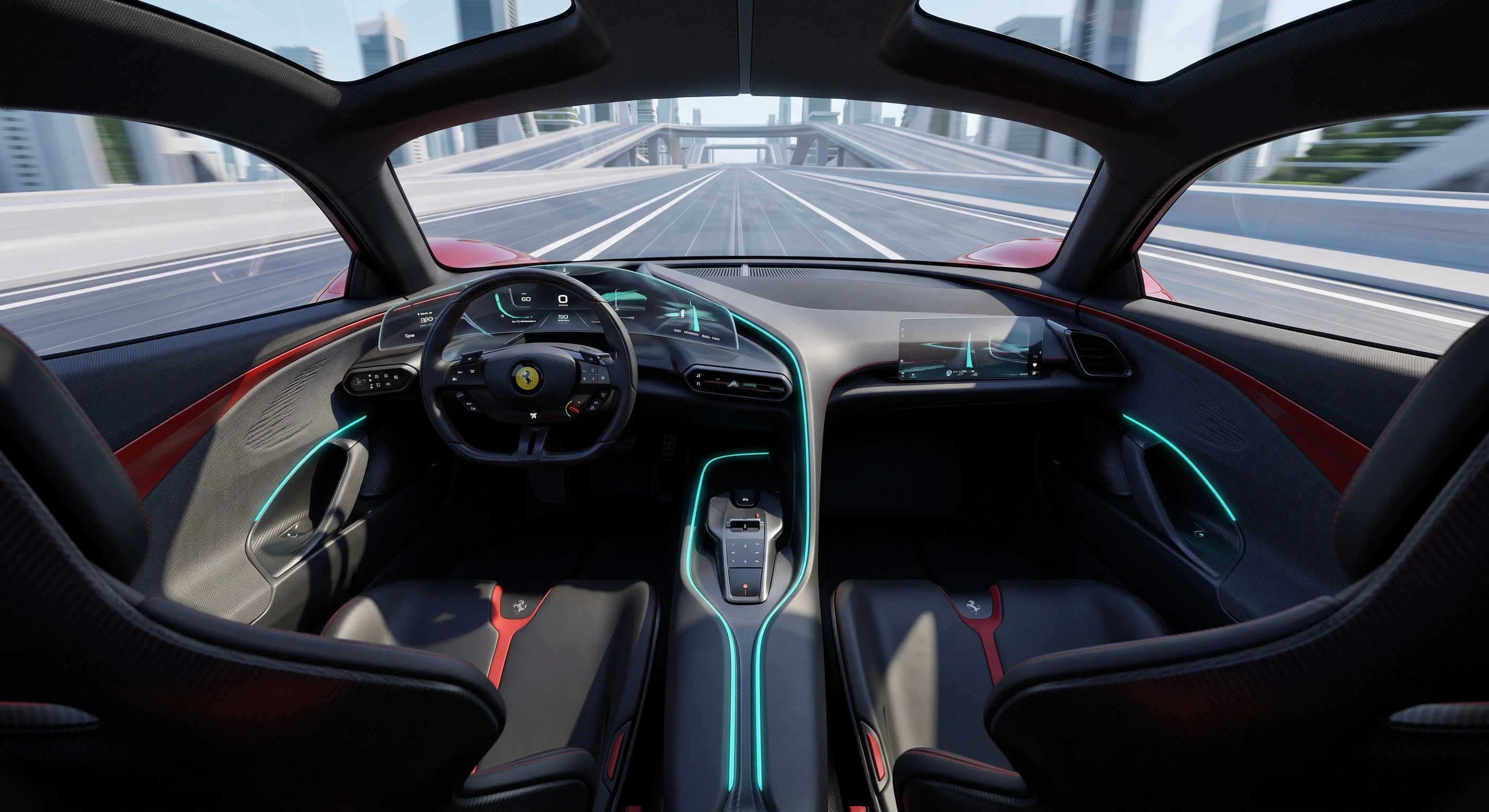
“The system uses a specialized flexible, bio-luminescent fiber optics (embedded in a composite matrix) to ‘pulse’ or flow more rapidly based on cooling demand, performance modes, and haptic feedback to driver inputs,” Gemini said.
On the passenger side, an integrated ‘Smart Glass’ screen offers up the chance to control the car’s secondary functions.
We’re talking about the audio, climate control, and other non-driving systems.
That takes a load off the driver’s mind and turns the passenger in something of a co-pilot.
And what about the traditional leather-and-Alcantara cabin we’ve come to love?
In line with current trends of sustainability, Gemini anticipated that the Ferrari’s interior would have evolved in line with this goal.
“The central structure is not just carbon fiber; it uses a next-generation composite that weaves high-strength carbon fibers with specialized polymer fibers, improving both structural rigidity and creating a tactile, ‘woven’ surface texture that is visible in the console and doors,” Gemini wrote.
“The seats use a structural composite shell for maximum lateral support, but the padding is replaced by a variable-density, 3D-knitted ‘bio-mesh’.
“This material is ultra-lightweight, highly breathable, and its density can be dynamically adjusted by embedded air-cell matrix systems to fit different body types and driving scenarios.”
Whether or not this will be the standard Ferrari in 2050 remains to be seen.
Let’s check back in 24 years from now and see how much of it Gemini got right.
Ferrari’s supercar evolution
1984 Ferrari 288 GTO: The origin of Ferrari’s modern supercar lineage.
1987 Ferrari F40: Built to celebrate 40 years—twin-turbo icon.
1995 Ferrari F50: F1 tech brought to the road with a V12.
2002 Ferrari Enzo: Advanced aerodynamics and carbon chassis.
2013 Ferrari LaFerrari: Ferrari’s first hybrid hypercar, 963 hp.
2024 Ferrari SF90 XX Stradale: Track-ready evolution of the hybrid supercar.
Ben joined Supercar Blondie in February 2025 after being published by international organizations including LADbible, The Sun, the New York Post, and the Daily Mail. He covers supercars, rare and collectible vehicles, aviation, luxury assets, and the fascinating people behind them. His reporting has explored everything from seven-figure supercars and historic Ferrari collections to unusual aircraft adventures and extraordinary automotive discoveries from around the world. Ben has also gained first-hand insight into vehicle craftsmanship and customization, including visiting specialist workshops to see bespoke vehicles up close.